The first 911 call came in at 1:58 on a Sunday morning.
Five minutes later, Austin police, fire and EMS upgraded the West Sixth Street mass shooting to an active attack. The city's alert went out to the autonomous-vehicle companies: stay away from the emergency.
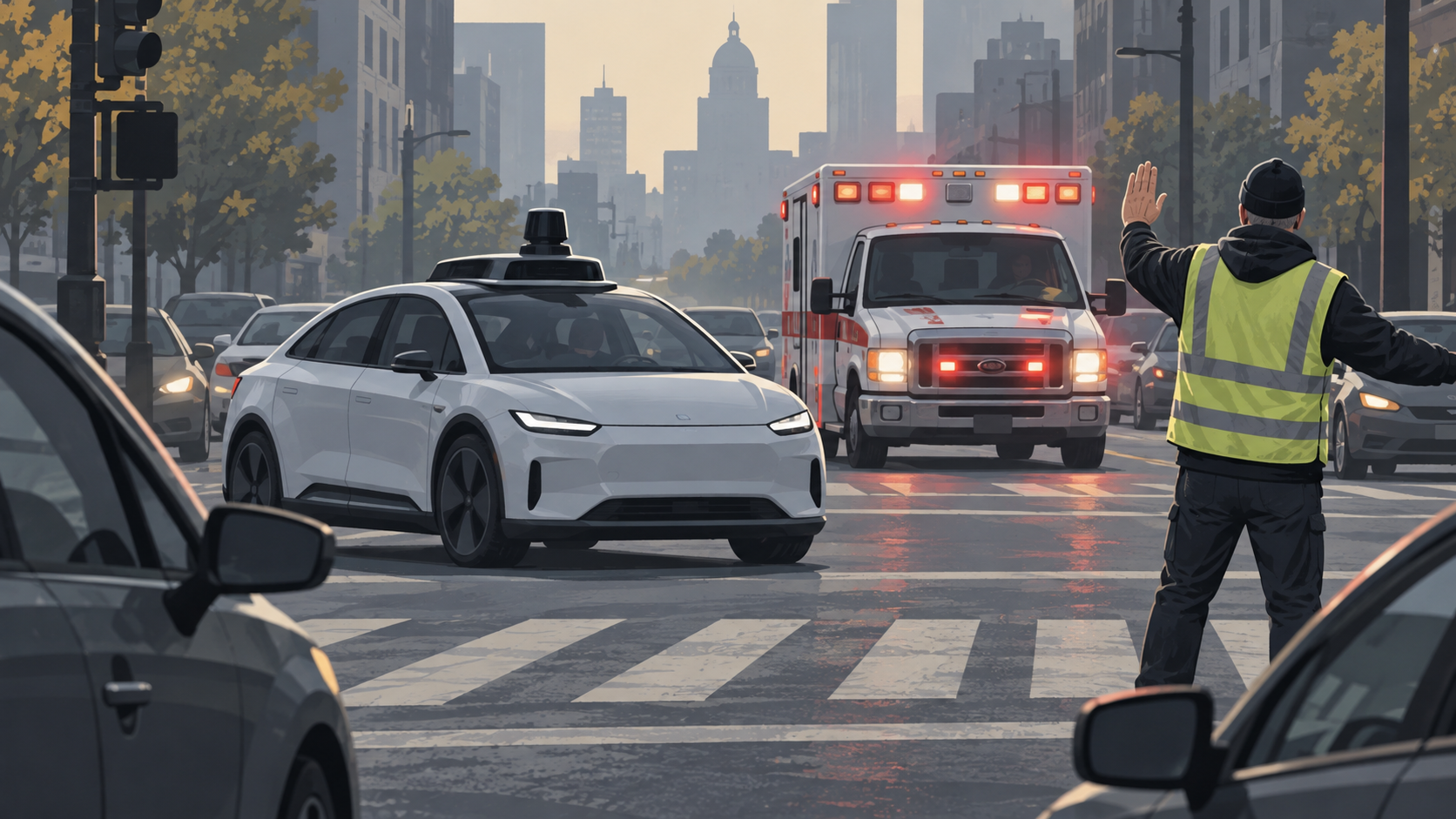
About eight minutes after that, a Waymo stopped in the middle of Nueces Street and blocked a responding ambulance.
The ambulance had to back up and find another route.
An Austin police officer took control of the driverless car and moved it into a garage. City officials said that took about two minutes.
Then more cars showed up.
More cars blocked the ambulance route
Austin Fire had set up a route on Guadalupe Street so ambulances could get in, collect patients and get out.
Firefighters later reported four or five Waymos stacked at Sixth and Guadalupe. Ambulances began stacking behind them.
Police and firefighters used hand signals to move the cars. The traffic light cycled several times. The cars followed the signal instead of the people standing in the intersection telling them where to go.
Responders contacted Waymo's remote assistance. The cars eventually moved, and ambulances were sent another way in the meantime.
Austin's public-safety presentation says the city expected a 1,000-foot electronic boundary, called a geofence, around the emergency. The initial boundary was smaller. It wasn't expanded until more than forty minutes after the first 911 call and repeated city requests.
City officials said the first blockage didn't affect patient care or the overall response. Police, firefighters and ambulance crews still had to spend time moving driverless cars during an active attack.
The software followed a rule
The cars didn't decide to block an ambulance. They met a situation their ordinary rules didn't handle well.
A green light told the cars to proceed while people in uniforms waved them away. The emergency alert required a boundary around the scene, and a stopped car with nobody behind the wheel required someone who could move it.
Before you rely on a person to intervene, ask:
How fast can the human see the problem? What can that person control? Does the machine recognize the command? What happens while everybody waits?
Austin officials said connecting with a remote agent has sometimes taken up to three minutes. Three minutes is a minor annoyance when your ride is confused at a hotel entrance.
That delay matters more when an ambulance is waiting.
Check what your chatbot can do
A chatbot with access to email, publishing, code, customer records or payments can make a mistake that affects other people.
Before sending a follow-up, look at the customer and attachment, including any internal note left at the bottom of the draft. You need to see what will leave your account.
Deleting duplicate files deserves a look at the folder and whether you can restore it. A count that jumps from 12 to 1,200 should make you stop and inspect what is selected.
For a published update, look at the account and the copy that will appear. An unverified number still sitting in paragraph three goes out with the rest.
A human approval step helps only when it arrives in time, shows the whole action and can stop the machine.
A green Continue button isn't enough.
Where the hand signal belongs
The machine has to wait while you look at the action and decide whether to approve it.
Show the message, destination, attachments and account before the action. A change to those details requires fresh approval. Keep permissions specific: drafting an email needs separate permission from sending it; reading a folder needs separate permission from deleting it; approving one small purchase covers that purchase alone.
Check one action before you connect it
Pick one AI tool that can take an action for you. Give yourself five minutes.
Write down the ordinary task. Under it, name the emergency: the wrong recipient, a bad attachment, a bill over the limit, a destructive command or private information in the payload.
Then answer:
- How will you know the tool left the ordinary path?
- What exact information will you see?
- Can you stop it before the action?
- What happens if the person or network doesn't respond?
- Who owns the result?
Keep that action disconnected until you can answer each question.
One question back
Name one action you wouldn't let AI take without showing it to you first. "Send an email" is enough.
Keep client names, account details and private documents out of the reply.
Sources
- KXAN, Austin leaders seek meeting with Waymo after car seen blocking first responders during mass shooting.
- City of Austin, April 29, 2026 Special Called Joint Public Safety and Mobility Committees meeting backup, especially pages 9–11.
- City of Austin, April 29, 2026 joint committee meeting transcript, especially pages 10–13.
- Austin City Council Message Board, April 29 meeting on autonomous vehicles and emergency response.
- Waymo, Advice, not control: the role of Remote Assistance in Waymo's operations, February 17, 2026.
Brad Heath and Josh are co-founders of Old Guyz AI. Brad is its in-house software developer.